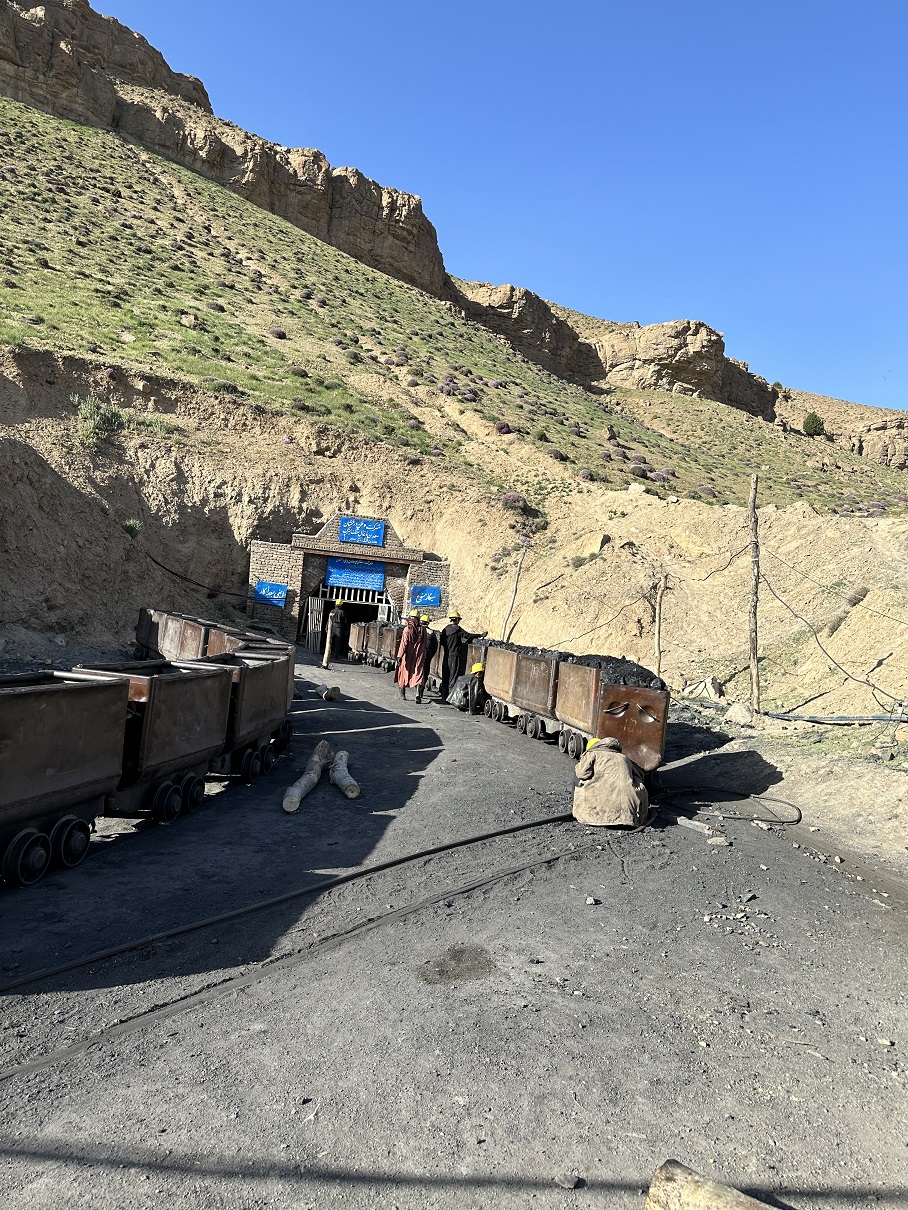
Coal Mines in Afghanistan
In terms of geological situation, Afghanistan has obtained a position between two tectonic plates (India and Eurasia) and it is limited to countries that are rich in various mineral resources in all provinces.
As a result of the chain studies conducted in the country, the geological map (1:500,000) of the order and so far this. The studies led to the identification of about (1616) mines, appearances and mineral evidence (solid reserves and hydrocarbons).
And the investigation process on it, according to the roadmap of the extractive industries sector, is a priority.
Based on the geological studies, two large coal mining areas have been established in the east-southeast and northeast-southwest sections, the first area of which has not been systematically studied.
The north-east-southwest coal zone extends in the form of a belt, starting from Badakhshan province and passing through the provinces of Takhar, Kunduz, Baghlan, Samangan, Balkh, Sarpul, Bamyan Daikendi, Jawzjan and Badghis to the Sabzak mine in Herat province.
It should be mentioned that until now, as a result of the geological research conducted by the Ministry of Mines and Petroleum, the number of
More than (113) mines and coal mineral deposits have been confirmed, including (18) mineral fields with reserves.
A total of 847 million tons is one of the most important discoveries of this ministry.
The most famous coal mines include Shabashak, Dehne Tor, Lilav Qara Naver, Western and Eastern Gramak, Sertor, Rashak and Qoubi, Sar Asiyab, Gole Chakark and Sabzak Kotel in Samangan province, Ashpashte and Klich in Bamyan, Gazstan, Bezghur and He mentioned salt water in Takhar, Taleh and Barfak and Nahrin in Baghlan, a wooden mosque in Sabzak, Herat, and Balkhab reservoir in Sarpol province.